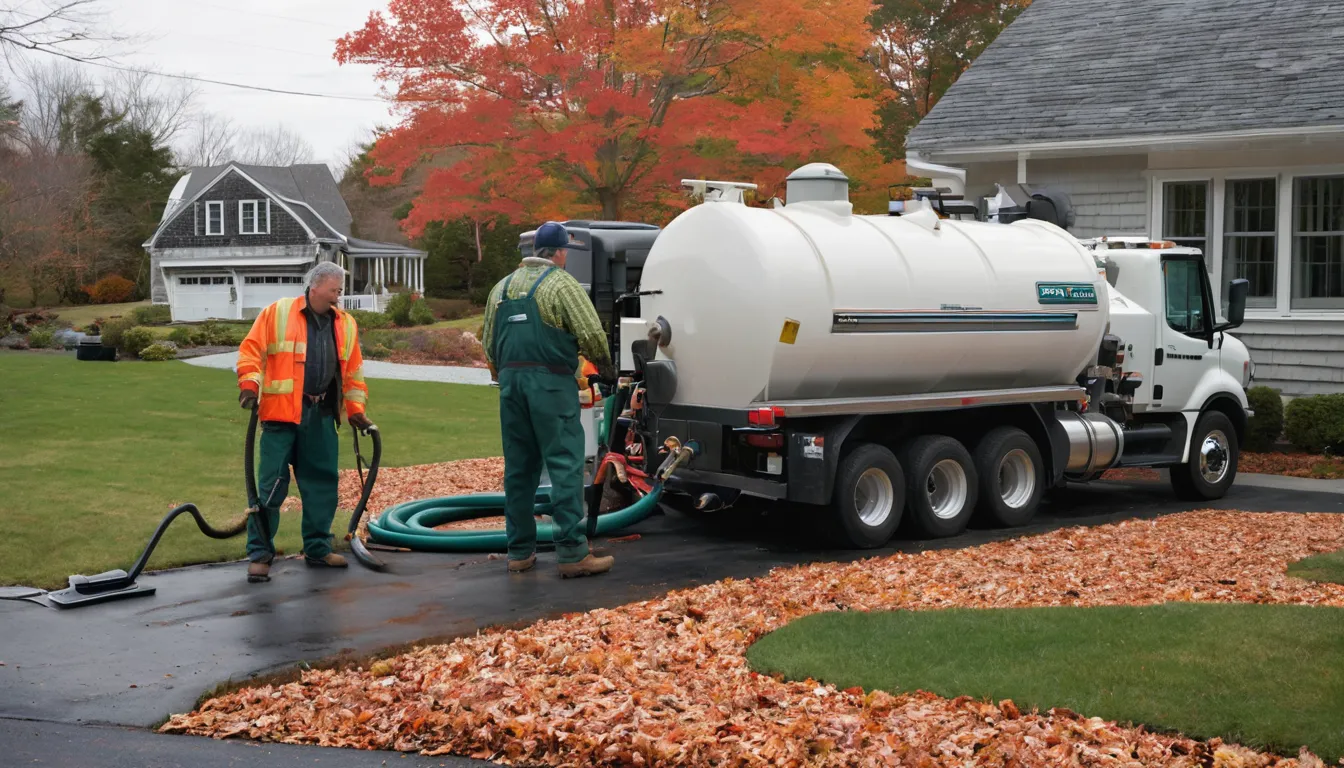
Septic Tank Pumping Services
Septic tank pumping removes built-up sludge and scum, and local providers in our network handle the work.
Send one request and get matched with an independent local provider. Insteadprovides Septic connects Sayreville homeowners with septic tank pumping and sewer line repair, so you can review an estimate before any work starts.

Two services cover most septic and sewer requests in the Sayreville area. Pick the one that matches your problem below, or send a request and let a provider help you work out which one fits.
Septic tank pumping removes built-up sludge and scum, and local providers in our network handle the work.
A failing sewer line gets worse with every flush, so get an estimate and a camera diagnosis early.
Many households pump every three to five years. A larger family, a garbage disposal, or a small tank means shorter intervals. A provider can measure sludge depth and recommend a schedule that fits your tank size and household.
No. Tank gases are dangerous, and opening a tank is unsafe. Pumping also needs a truck, hose, and legal disposal of waste. Homeowners can help by locating the lid and keeping records, then letting a provider handle the rest.
In the U.S., typical sewer line repairs run from a few hundred dollars for a spot fix to several thousand for a long replacement. Depth, access, pipe material, and pavement all affect it. Get a written quote.
Often yes, but frozen ground can slow digging and make lids hard to find. Pumping is usually possible if the lid is clear. Major drainfield repair is often easier after the thaw.
Stop using water, keep people and pets away, and avoid touching the sewage. Then request emergency septic cleaning or sewer service through the form, or Request a callback to check provider availability. Providers can often help document damage for a claim. Some policies may cover sudden damage, so check your policy.
Send a short request about your septic or sewer problem. A local provider replies with next steps and an estimate. There is no obligation to book.
No obligationDescribe the problem once and a provider replies with next steps and an estimate. You review it before agreeing to anything, with no obligation.
Providers are separate local businesses. They do the work and set their own prices.
Frost, snowmelt, and storms affect when pumping and repairs make sense. Providers can help you plan around the weather in your area.
Homeowners can track pumping dates and protect the drainfield. Tanks, buried lines, and gas hazards belong to professionals with proper equipment.
A slow drain, a gurgling toilet, or a soggy patch in the yard usually points to the septic or sewer system. Insteadprovides Septic is a referral service for homeowners in Sayreville, NJ and the Sayreville area. It connects you with independent providers in the network. Insteadprovides Septic does not do the work itself.
Two services cover most requests: septic tank pumping and sewer line repair. Pumping clears built-up solids from the tank. Repair fixes a broken, blocked, or root-invaded line between the house and the tank or the main.
Start with the request form. Give your general location, the symptoms, and the type of home. A local provider reviews it and replies with next steps and an estimate. Costs vary by job, so ask for a written quote before work begins.
Season matters here. Cold ground, spring snowmelt, and coastal storms all change how these systems behave. They also change when work is practical.
Prefer to talk it through? Request a callback to check provider availability.
You send a short request. Insteadprovides Septic routes it to an independent provider in the network who serves your part of the Sayreville area. The provider contacts you, asks a few questions, and gives an estimate. You decide whether to proceed. There is no obligation.
Insteadprovides Septic does not perform or supervise the work, and it does not set prices. Ask each provider about licensing, insurance, and a written quote.
Some jobs are yours. Find the tank lid and sketch its location. Log pumping dates. Spread out laundry loads. Keep grease, wipes, and paint out of drains. Keep vehicles and heavy loads off the drainfield.
Other jobs are not. Never open a tank or climb inside. Sewer gas is dangerous. Locating buried lines, camera inspection, jetting, and excavation need professional equipment and training.
Cold ground, snowmelt, and coastal storms change how septic and sewer systems behave. They also change when work is practical. Planning ahead gives you more choices than waiting for a backup.
Insteadprovides Septic serves homeowners in Sayreville and across the Sayreville area. The housing mix shapes the work. Older homes often have aging clay, cast iron, or fiber pipe. Stone and block foundations can crack or shift with the frost cycle, and that strains lines passing through them. Full basements add risk, because a backup has nowhere to go but the floor drain.
Cape Cod style homes and multi-family buildings bring their own questions. A small home on a modest lot may have a compact tank and a tight drainfield. A multi-family building puts more load on one system, so pumping intervals are usually shorter. Tell the provider how many people live in the home and how many bedrooms it has. Those two facts drive the estimate.
The coast matters too. Storm surge and a high water table can saturate a drainfield, and heavy rain can push groundwater into leaking pipes. Providers in the network know the local soil and the local rules.
The form asks for your general location, the symptoms, and the type of home. Add a preferred time window if you have one. A provider replies with next steps.
Not sure which service you need? Describe what you see, and the provider can help narrow it down.
Frost runs deep in cold winters. Snow cover insulates the ground, so leave drifts over the tank and field alone. Do not plow or park on them. Fix dripping fixtures. A constant trickle can overload a system and ice up a line.
Melting snow soaks the drainfield while the ground below is still cold. Slow drains, gurgling, and wet spots often show up now. Limit laundry and long showers during the thaw. Ask for an inspection if the yard stays soggy.
Heavy rain and storm surge can flood tanks and lift lids. After a storm, watch for backups and odd smells. Some providers handle emergency septic cleaning when a system is overwhelmed.
Dry ground makes access simple. It suits septic tank pumping, camera inspection, and drainfield repair. Providers book up around peak storm months, so ask early.
Schedule pumping before the ground hardens. Mark the lid so it can be found under leaves or snow. Deal with root or pipe issues spotted over the summer.
Old lines and block foundations take a beating from frost. Ask a provider whether a backwater valve makes sense for your basement. Many homeowners learn about weak pipe only after a backup.
If your property has a private well, ask about water well service when you book. After a flood or a major backup, testing the water is a sensible step.
Ready to get started? Send a short request describing the problem, your general location, and the type of home. A provider in the network replies with next steps and an estimate. Estimates are not binding, and there is no obligation to book.
If you would rather talk it over, Request a callback to check provider availability. Hours vary by provider, so the request form is a simple way to get in the queue.
Send a short request about your septic or sewer problem. A local provider replies with next steps and an estimate. There is no obligation to book.
No obligation